skip to main | skip to sidebar
GLCtest
  • HOME
    • ABOUT US
    • GLC ANTHOLOGIES
  • LINKS
    • RECOMMENDED SITES
    • DISCLAIMER
  • GLC Global Board
  • AUTHORS
  • CONTACT
  • GLU
  • ICDD
  • Follow Us on Twitter

    Showing posts with label Labour Market. Show all posts
    Showing posts with label Labour Market. Show all posts

    13 February 2012

    A Tide of Inequality: What can Taxes and Transfers achieve?

    Malte Luebker [1]
    Inequality is a top issue in the public agenda, partly as a result of the financial crisis that helped draw attention to this topic. As banks relied on the support of taxpayers and millions of workers had lost their jobs, people began to see the compensation of bank CEOs – with an average 2010 pay package of $9.7 million in Europe and the US[2] – as obscene.
    Those at the top of society have long captured the gains from economic growth. From 1970 to 2008, the annual incomes of the top 1% of US taxpayers rose threefold in real terms from $380,000 to $1,140,000. By contrast, the incomes of the bottom 90% remained where they were in 1970 – at $31,500 per year (in real 2008 dollars).[3]

    Read More »

    19 September 2011

    Argentina’s ‘Year of Decent Work’, a critical assessment

    Bruno Dobrusin
    The centre-left government of Cristina Kirchner declared 2011 as the ‘Year of Decent Work’ in Argentina, following consultations with the ILO and other international institutions regarding government programmes during the current global economic crisis. The Kirchner administration has indeed promoted several counter-cyclical measures to fight against the global recession and maintain levels of employment in the country. The relative success of these policies, together with the continuous economic growth that Argentina has witnessed since 2003, led the government to tour the international forums such as the G20 meetings and claim that Argentina is an example of a successful response to the crisis. Despite the improvements in the overall economy and the high levels of employment that the country is witnessing, the so-called ‘model’ is far from ideal, and has to be questioned on its main claims. This article discusses the recent improvements as presented by the government and the counter-facts suggested by a recent study carried on by the Workers’ Confederation of Argentina (CTA)[i].
    The Decent Work Agenda proposed by the ILO is based on four pillars: employment creation, rights at work, extending social protection and promoting social dialogue. The main focus here is on employment creation in Argentina over the past few years, and on the quality of employment created. Since 2003 Argentina has had a remarkable economic recovery, with an average eight percent annual growth. The devaluation of the currency in late 2002 led to the protection of an important part of industrial production, which explains the generation of employment in the time period. Between 2002 and 2007, the rate of employment increased to levels unseen since 1974, creating approximately 3.7 million new jobs out of which half are in the formal sector[ii], with the industrial sector as the main participant. It has to be recognised that the success of the industry is the reduction of the labour cost in dollars of an important industrial sector, which, due to the low technological component, can compete with imported products through the lowering of salaries in dollars. The leading sectors in the period, the automobile and the iron and steel industries, do not need the exchange rate protection nor did they contribute to employment recovery. Towards 2009, with higher production, employment in the automobile companies was lower than that registered in the middle of the 1990s. The reason is that it is an enclave industry, with small participation of production from Argentina
    In the period 2003-2010 social protection was improved, with a current 86 percent of the population receiving benefits from social security systems (both private and public), up from 60 percent in 2003[iii]. In addition to this, the government has also produced a recovery in the minimum wage negotiations by bringing back the Minimum Wage Council, with participation by unions, the state and the employers. This has produced a consistent increase in the minimum wage, at an average rate of 20 percent a year. This set of achievements is being presented by the Kirchner administration to the G20 as an example for other countries to follow. The ILO has supported the government in its promotion of a firm decent work agenda. However, behind this policy, there is a harsh reality that is not being heard about Argentina and the labour policies of the current administration.
    There are a number of reasons that justify the assessment that Argentina is not indeed the paradise of decent work. According to two different studies made by alternative trade unions, the employment situation in the country is actually grimmer than that presented by the government. The main difference in the evaluation of these studies is the statistics used. The government has consistently denied the inflation levels and has intervened in the National Institute of Statistics, through appointing a new director and changing the figures of inflation on a monthly basis. This arbitrary decision has been consistently criticised by the workers’ representatives in the Institute. When we take the statistics produced by other public non-intervened institutes, employment figures remain virtually the same since 2007, without improvements in the 8 percent unemployment figure[iv]. If we look at employment creation, it was significant in the period between 2003-2006 that an average of 750,000 jobs was created per year, but it declined in the period between 2007 and 2010 to an average of only 200,000 jobs annually[v]. Moreover, the government claims that informality has decreased over the past decade, when it actually remains at historically high levels. Out of the 3,7 million jobs created, more than half are in the informal sector, which remains at an overall level of 40 percent of the employed population[vi]. Among the youth, informality is even higher, reaching 60 percent of the employed[vii], and with worse working conditions. These factors are closely related to the still relevant 30 percent poverty levels, and just over 5 million people below the level of extreme poverty[viii]. Argentina is not then a good example of a country overcoming the decent work deficit and there remains a need for significant change in the working conditions of the majority of Argentinian citizens.
    In reality, informal and precarious working conditions continue in Argentina. Only the salary of the formal workers compensates for the increases in prices, leaving a minority that can sustain their living standards. The current real wage is similar to that of low earners in 2001 at the moment of the economic crisis. The unemployment rate continues to be greater than the same rate in the early 1990s, and it is still much higher than in the 1970s and 1980s. In addition, the stages of ‘social dialogue’ promoted by the government only include the main trade union confederation (CGT), a key ally of the government. There is no intention in the Kirchner administration to recognise any of the alternative trade union confederations, countering the demands made consistently by the ILO in its Freedom of Association reports.
    At the September G20 meeting of Labour Ministers, the Argentine government will present their response as the example for other G20 governments to follow, especially those undergoing economic crisis. However, Argentina is still far from an ideal place for labour policies and labour rights. As presented here, the country still has to discuss the productive and developmental model that currently produces immense wealth and a GDP growth of 8 percent a year, but it provides these high profits for a small group of heavily concentrated business groups, mostly foreign, and keeps workers in precarious working conditions.
    [i] IDEF-CTA. “Sobre el trabajo decente. Contexto general, informalidad laboral y políticas publicas”, July 2011.
    [ii] Labour Ministry of Argentina. “Trabajo, Empleo y Ocupacion. Una Mirada a sectores económicos desde las relaciones laborales y la innovación”, June 2010, p. 43
    [iii] Labour Ministry of Argentina. “Trabajo y Empleo en el Bicentenario. Cambio en la dinámica del empleo y la protección social para la inclusión social. Periodo 2003-2010”, September 2010., p.49.
    [iv] IDEF-CTA, p.2.
    [v] IDEF-CTA, p.4
    [vi] Ibid, p.21.
    [vii] Ibid, p.27.
    [viii] Ibid,p.14

    Download this article as pdf

    Bruno Dobrusin is MA candidate at the Tata Institute of Social Sciences, Global Labour University. He is also advisor to the International Relations Secretariat of the Argentine Workers' Confederation (CTA) and research scholar at the Institute of Studies of State and Participation, belonging to the State Employees' Union of Argentina. He is currently involved in the follow-up of the process of regional integration within South America for CTA.

    12 September 2011

    The euro crisis and the European trade union movement

    Vasco Pedrina
    After successfully bailing out banks and adopting a first wave of economic recovery measures, the authorities of the European Union (EU) and its member states began to impose draconian, anti-social austerity plans from the beginning of spring 2010. These plans stem from an increasingly coordinated policy at the EU level, which is entering a new phase with the “Euro-Plus Pact” and the “enlarged bailout plan”. Dressed up as part of a fight against “macroeconomic imbalances”, new mechanisms are to be put in place. These will provide EU authorities with the means to step up the pressure for general social dismantling. Concretely, this amounts to a “wages straitjacket” that calls into question the autonomy of social partners (one of the pillars of the “European social model”), raises the retirement age across European countries and introduces legislation to curb national debt. This policy is not only having dramatic social repercussions. It is also heading up an economic blind alley that is putting the euro at risk.
    At its Congress in Athens in May 2011, the European Trade Union Confederation (ETUC) reaffirmed its opposition to the currently prevailing neoliberal economic policies and once again demanded a change of course. The only conceivable way of pulling the eurozone out of crisis is a combination of measures aimed both at boosting economic growth and at a gradual reduction of debt levels and macroeconomic imbalances. The ETUC is calling for a “New Social and Green Deal” consisting of a large investment plan, the issuing of eurobonds, low-interest liquidity provision by the European Central Bank (ECB) and a low-carbon industrial policy underpinned by fiscal reforms, which should include a tax on financial transactions. As far as Greece is concerned, it is now clear that it will not be able to break out of the present vicious circle without a really substantial recovery plan financed by the EU within the framework of a sort of Marshall Plan for countries in distress. The ETUC is also demanding a thorough overhaul of the “Euro Pact” – particularly the part on wage and retirement measures.
    Mobilising against social suffocation
    To back this alternative economic programme, the ETUC has held four European action days in the past two years. Demonstrations and strikes spread across many European countries, but they did not build enough pressure to halt the neoliberal steamroller. Back in the days of the “social democratic compromise” under the presidency of Jacques Delors, protests of that size would have been seen as a good reason for getting down to negotiations. Today, that is no longer so. Neither the EU authorities nor those of the member states were swayed by the protest action. True, the European trade union movement has, in the meantime, managed to get the most reactionary legal provisions expunged from the Euro Pact, but its antisocial thrust remains, as do the national austerity plans. At the same time, some pillars of the “European social model” are under relentless attack. Symptomatic of this is the EU political authorities’ refusal to correct the precedent created by the European Court of Justice (ECJ) in the Laval, Viking, Rüffert and Luxembourg cases of 2007/08. Through these rulings, the ECJ called into question the basic principles of social Europe, such as the precedence of basic social rights over the economic freedoms of the internal market, the principle of “equal pay for equal work in the same place”, the right to strike in order to combat wage dumping, and the autonomy of the social partners.
    European trade unionism at a crossroads
    “Social Europe” is under pressure. Clearly, there will be no change of course unless pressure from strikes and political action coordinated at the European level builds up on a scale quite different to anything that has been achieved up to now. And yet, in the wake of the crisis, unions are falling back to defensive struggle positions within national frameworks. Evidently, the unions have put too little energy into European mobilising. Even 80,000 people on the march in Brussels no longer have such a great impact.
    The time has come to re-examine our strategy if we do not want to look on helplessly as the European trade union movement slides into irremediable decline. The current debate on this issue within the political left and the trade union movement is seeing the emergence of two currents of thought. One of them advocates a strategy of “renationalising policy”. Those supporting this “fallback strategy” argue that, as the EU is on the road to neoliberal damnation, the only realistic response would be to set up resistance networks to defend the social State within the national framework. The left-wing supporters of this position are, de facto, putting themselves in the same camp as the conservatives within the trade union movement who, like quite a lot of Nordic confederations, believe that the “lone road” is the best way of defending their “Nordic social model”, even though that model is more and more threatened by new developments within the EU.
    The other school of thought advocates an “offensive strategy” of Europeanising social struggles. Their argument is that the only positive alternative is a quantitative and qualitative leap forward in joint political action and mobilising across Europe. But the days in which such a leap might still be made successfully are numbered. There is a serious risk that the Euro Pact, together with the whole series of austerity plans, will cause such an increase in the imbalances between and within countries that the social and political tensions will become unbearable, due to the rise of populist forces. The already growing tensions among trade union confederations in Europe and among confederations within individual countries (such as Italy) give some idea of where such developments could lead, namely to a catastrophic paralysis of the labour movement.
    Levers for Europeanising social struggles
    The strikes and mobilisations over the past two years in various European countries have led to the emergence of new demands, new forms of action and new alliances from which useful lessons can be drawn for the Europeanisation of trade union resistance networks. At the same time, other routes may lead to the qualitative leap described above. At the ETUC congress, two proposals were discussed for campaigns with the potential to launch a real, coordinated counter-offensive.
    One of these proposals concerns the response to the currently prevailing neoliberal economic policies. It is based on the alternative ETUC economic programme mentioned above, on reinforced coordination of bargaining policy and on an offensive for a European minimum wage policy and against the precarisation of jobs. Workplace strike capacities in support of European demands need to be strengthened in order to achieve these objectives. Granted, the ETUC congress did adopt a proposal from the Spanish confederations CCOO and UGT, calling for serious examination of the feasibility of coordinated strikes or a European general strike, but it did so without conviction. Clearly, the political will is still lacking, but this state of mind could change if the pressure of suffering continues to mount, which it probably will.
    The second proposal, entitled “Equal Pay, Equal Rights”, aims to give new impetus to the struggle for workers’ rights, which are under attack almost everywhere, as well as the struggle against wage dumping. To support this campaign, the Swiss Federation of Trade Unions has proposed the launching of a European Citizens’ Initiative (ECI) entitled “For a Europe without wage dumping – Priority for basic social rights over economic freedoms”. Under the new Lisbon treaty, citizens can petition EU authorities on new policies and legislations with one million signatures. An ECI of this kind would be aimed at giving the EU a mandate for the legislative measures needed to ensure that precedence for basic social rights over economic freedoms becomes generally applicable throughout the European Union.
    Launching such an ECI would enable broad awareness-raising (and mobilisation) in workplaces and among the union rank-and-file right across Europe – something that has not been possible so far. Other social movements and political forces that share our concerns about the future of social Europe could be associated with the ECI. The ETUC congress accepted this second proposal, which a working group is to put into concrete form by the end of this year. But it did not give a clear green light to the decisive lever for such a campaign, namely the ECI. The reservations come from countries such as France, the UK and Italy, whose union confederations say they have no tradition of collecting signatures for this kind of instrument. They are underestimating the potential of a citizens’ initiative as an instrument of decentralised awareness-raising and political pressure for a common objective throughout Europe.
    The ETUC congress could have sent out a strong signal for a large-scale political and trade union European counter-offensive. The lack of energy to go down that road is probably due to the way that unions in quite a few countries have been hit and weakened. Nonetheless, it may well be that a response on a scale to match the current challenges will become possible once the pressure of suffering rises even further, and people will be forced to realise that a social and political turning-point cannot be reached without strengthened trade union policy coordination beyond national borders. This will require an alliance with all interested social movements and political forces. The future of social Europe and of the European integration process is at stake.

    Download this article as pdf

    Vasco Pedrina is the National Secretary of the Swiss inter-professional trade union Unia and Vice-President of the Building and Wood Workers’ International (BWI). He represents the Swiss Federation of Trade Unions (SGB/USS) on the ETUC Executive Committee.

    5 September 2011

    7 Reasons why a Universal Income makes Sense in Middle-Income Countries


    Hein Marais
    Is job creation really the best way to seek wellbeing for all in countries with chronic, high unemployment? No – especially not in a wealthy middle-income country like South Africa, where very high unemployment combines with high poverty rates. Here are 7 reasons why a universal income grant makes more sense.
    1. EARNING A DECENT SECURE WAGE IS NOT A PROSPECT FOR MILLIONS OF SOUTH AFRICANS
    While the rewards of South Africa’s modest economic growth are cornered in small sections of society, close to half the population lives in poverty, and income inequality is wider than ever before.
    Job creation improved modestly as economic growth accelerated in the early 2000s. About 3 million ‘employment opportunities’ were created in 2002-08. The semantics are important. Very many of those ‘opportunities’ did not merit being called ‘jobs’. They divided roughly equally between the formal and informal sectors, and occurred mainly via public works programmes, business services, and the wholesale and retail trade sectors. A lot of them were crummy, insecure and poorly paid.
    The average unemployment rate for middle-income countries is in the 5-10% range; in South Africa, it is about 25%. Add workers who have given up looking for jobs, and the actual rate sits around the 35% mark. Since late 2008, the private sector has been shedding jobs, and the public sector’s been trying to add new ones. It’s an endless game of catch-up.
    2. HAVING A JOB DOES NOT AUTOMATICALLY SHIELD AGAINST POVERTY
    Having waged work is the single-most important factor deciding whether or not a household will be poor. But earning a wage does not guarantee that you won’t be poor.
    Vast numbers of workers earn wages so low and on such poor terms that their jobs don’t shield them against poverty. Increasingly that applies also to formal sector jobs. Almost one fifth (some 1.4 million) of formal sector workers earned less than R 1 000 (USD 125) a month in the mid-2000s, according to Statistics SA data.
    Two factors drive these trends: the shift towards the use of casual and outsourced labour, and the related decline in real wages for low-skilled workers.
    The average real wage is being propped up by the improved fortunes of comparatively small numbers of high-skilled, high-wage workers. Workers without tertiary qualifications lost about 20% of their average real wage. And women in the formal sector earned less in real and relative terms in 2005, compared with 1995.
    From the late-1970s into the 1990s, South African companies tried to compete and maintain profit levels by upgrading machinery and introducing new technologies to achieve higher productivity and reduce reliance on militant, organised workers.
    Eventually the dividends dwindled, and currency crashes since the mid-1990s inflated the cost of imported technology.
    The hunt for profit required another squeeze, and it was applied to the wages and terms of employment of workers who are not shielded sufficiently by labour laws and shopfloor organising.
    Company profits as a share of national income rose from 26% in 1993 to 31% in 2004, while workers’ wages fell from 57% to 52%.
    Companies now rely on a shrinking core of skilled, full-time workers and a larger stock of less-skilled and badly paid casual or out-sourced labour. By 2008, according to the Labour Ministry, about half the workforce was in casual and temporary jobs.
    Job creation is vital. But it’s not a match-winner anymore – not in the kind of economy and labour market that defines South Africa. The quest for more – and better jobs – has to occur as part of the wider realization of social rights.
    3. SOCIAL GRANTS SEPARATE MILLIONS FROM DESTITUTION BUT IT IS ILL-SUITED TO TODAY’S REALITIES
    The impact of the social grant system is beyond dispute. According to Statistics SA, the increase in incomes among the poorest 30% of South Africans after 2001 was mainly due to social grants (especially the child support grant). They’re the best poverty-alleviating tool South Africa has at the moment.
    Beneficiaries rose radically since 2000. The 2.6 million recipients of pensions and social grants increased to about 14 million in 2010. About 43% of households in 2007 received at least one social grant; in half of them, pensions or grants were the main sources of income.
    A large proportion of low-income households would probably be unviable without these grants.
    The current social protection system hinges on the fiction that every worker, sooner or later, will find a decent job. Thus the grants were designed to assist people who, due to age or disability, cannot reasonably be expected to fend for themselves by selling their labour. Meanwhile, the employed have access to employer- and worker-subsidised protection (all tied to employment status).
    But large numbers of vulnerable workers are not eligible for these state grants, and do not benefit from employment-based provisions.
    4. TARGETED AND MEANS-TESTED SOCIAL PROTECTION IS BURDENSOME, COSTLY AND HUMILIATING ADMINISTRATION
    Most states prefer to ration cash grants by targeting them and tying them to certain conditions. South Africa is no different (though only the child support grant is nominally conditional at this point).
    This is administratively expensive, and it tends to be difficult, especially when it is tough to determine an individual’s income, and when that income is likely to fluctuate significantly.
    It runs the risk of creating arbitrary divides between those who benefit from social grants and those who do not. Which is why critics regard the approach as expensive, inefficient and ‘offensive to basic egalitarian principles’, as Guy Standing puts it.
    Most means-tested social grants involve burdensome and humiliating interactions with the state that basically involve ‘proving’ to a stranger that you’re poor and unable to fend for yourself and your family. This is why huge stigma and shame tend to attach to them.
    A universal income grant would be available to all adult citizens, and would be neither conditional, nor targeted or means-tested. The tax system would be used to retrieve (and help finance) the grants from individuals who don’t need them because their incomes are high enough. The grants would form a cornerstone of a broader social protection system.
    5. A UNIVERSAL INCOME IS DEVELOPMENTAL AND WOULD BOOST WELLBEING
    Cash transfers bring powerful anti-poverty, developmental and economic benefits. The observed effects include reduced stunting in children and better nutrition levels, and higher school enrolment of young children.
    In a localized, universal income pilot project in Namibia, child malnutrition declined and school attendance increased significantly within 6 months. Recipients also became more active in income-generating activities.
    Financial simulations have shown that a universal grant as small as R 100 per month could close South Africa’s poverty gap by 74%,[1] and lift about six million people above a poverty line of R 400 (USD 50) per month.
    Cash grants can also help drive more inclusive patterns of growth. Brazil’s expansion of social transfers (especially via the bolsa familia, a conditional grant) along with the extension of the minimum wage has boosted internal demand for local products and services, and aided the growth of formal jobs, as Janine Berg shows in a recent paper.[2]
    6. A UNIVERSAL INCOME CAN BE A POWERFUL EMANCIPATORY TOOL, ESPECIALLY FOR WORKERS
    Cash grants contain a radical, emancipating potential. The key is to uncouple them from the labour market, which a universal income grant can achieve.
    This is a potentially radical and subversive turn that confronts the ‘double separation’ that is typically imposed on workers – separation from the means of production and from the means of subsistence.
    The impact potentially reaches much farther than gains in social justice.
    A universal income has the potential to improve the wages and terms of employment for low-skilled workers. If the bare necessities of life can be secured elsewhere, demeaning and hyper-exploitative wage labour is no longer the ‘only option’.
    Its most subversive effect is to equip people with the freedom not to sell their labour and to withdraw, at least sporadically, from the ‘race to the bottom’ between low-skilled workers in high unemployment settings.
    Thus a universal income can endow the weakest with bargaining power. Linked with other efforts to strengthen wellbeing and expand the content of citizenship, it can contribute toward significant redistribution of power, time and liberty. It also challenges one of the anchoring principles of Anglo-capitalism, which binds employment and citizenship together.
    7. A UNIVERSAL INCOME TREATS WOMEN AS CITIZENS, NOT MERELY AS CAREGIVERS AND BEARERS OF CHILDREN
    Millions of women in SA have entered the labour market since 1980s, despite their exceptionally poor job and wage prospects. Three quarters (75%) of African women younger than 30 years are unemployed. Most who do find employment tend to work part-time, for low wages and in highly exploitative conditions.
    Yet women also bear the bulk of responsibility for social reproduction, and they head more than 40% of households, the majority of them single-parent, impoverished households.
    Overall, the sexual division of labour in both the domestic sphere and labour market remains structured in ways that enable men to monopolise full-time and better-paying jobs, while women perform most of the household labour. Men, whether employed or not, continue to ‘free ride’ on women’s work – paid or not.
    A guaranteed universal income challenges these arrangements, by helping provide currently inaccessible economic independence, and by strengthening the negotiating position of women who do enter the labour market.
    CONCLUSION
    More jobs are vital and feasible. However, the quest for more jobs has to occur as part of a wider realization of social rights. A universal income grant would be a powerful intervention for radically reducing the depth and scale of impoverishment, and for enhancing liberty.
    [1] The poverty gap refers to the total income shortfall of households living below the poverty line. A narrower poverty gap means more households would edge closer to, or above the poverty line.
    [2] Changes in labour market and social policies boosted consumption and economic growth in rural and poor areas, and created a steady demand for small retailers and service providers. That boost in demand also affected other parts of the value chain, including formal manufacturing and distribution (Berg, 2010). See Berg, J. (2010). “Laws or luck? Understanding rising formality in Brazil in the 2000s”. Working Paper no. 5. ILO Office in Brazil. ILO.

    Download this article as pdf

    Writer and journalist HEIN MARAIS is the author of the new book ‘South Africa Pushed to the Limit: The political economy change’, published by UCT Press and Zed Books. It is available online and at good bookstores.

    22 March 2011

    Global Wage Trends: The great Convergence?

    Patrick Belser
    Average wages
    The financial and economic crisis has cut global wage growth by roughly half in 2008 and 2009. Based on a sample that covers a large chunk of the world’s 1.4 billion wage-earners, the Global Wage Report 2010/11(i) finds that the global growth in real monthly wages slowed from 2.7 and 2.8 per cent in the two years before the crisis (2006 and 2007) to 1.5 and 1.6 per cent in 2008 and 2009. If China – where data coverage is limited to fast growing “urban units” – is excluded from the sample, the average wage growth drops from 2.1 and 2.2 per cent before the crisis to 0.8 and 0.7 per cent in 2008 and 2009. In 2010, preliminary results suggest that wages have started to recover, but not as fast as profits and not yet to pre-crisis levels. Generally, wages have taken a bigger hit in developed than in developing countries.
    This short-term cost of the crisis to workers must be understood in the context of a longer-term trend towards wage convergence across regions. Table 1, taken from the Global Wage Report 2010/11, shows that while average wages more than doubled in Asia since 1999 and more than tripled in Eastern Europe and Central Asia (which partly reflects the depth of the wage decline in the 1990s), wages stagnated in advanced countries, increasing by just about 5.2 per cent in real terms over the full decade. This is less than the rate at which Chinese wages grow in one year. The base from which Chinese wages are growing remains, of course, much lower. The average American worker still earns in about one month what a Chinese worker in the private sector earns in one year. The point, however, is that the gap is closing and that the economic and financial crisis – as well as the slow recovery of wages in the West – has accelerated this convergence.
    Table 1 Cumulative wage growth, by region since 1999 (1999 = 100)
    * Provisional estimate / ** Tentative estimate / … No estimate available
    Source: ILO Global Wage Database.
    One factor that contributes to the convergence is the faster growth in labour productivity in developing regions. Another factor is the apparent decoupling between productivity and wage growth in advanced countries. According to one calculation, while average wages in advanced countries grew by 5.2 per cent over the last decade, labour productivity increased by 10.3 per cent (see Figure 1). In other words, wages grew only half as fast as labour productivity. One simulation indicates that if wages had grown as rapidly as productivity, average wages in advanced countries could have gone up from roughly US$ 2,864 per month in 1999 to $3,158 in 2009 instead of only $3,012 (figures are expressed in 2009 PPP dollars). Distributed over all paid employees, this decoupling may thus have cost workers in advanced countries hundreds of billion dollars in forgone wages over the full decade. These resources have not exactly been lost to everyone – since they went into profits and investment. But this redistribution has certainly limited non-credit based household consumption, and at least partially explains the low interest rates that were needed in some countries before the crisis to keep consumption going.
    Figure 1
    Note: Since the indices refer to a weighted average, developments in the three largest advanced economies (United States, Japan and Germany) have a particular impact on this outcome.
    The low pay crisis
    The long-term losses to labour have not been equally distributed between all workers. Those who have suffered most from the decoupling are the workers at the middle and the bottom of the wage distribution. Those at the top have fared better, as indicated by the increasing gap between mean and median wages in many countries and epitomized by the ongoing bonus-bonanza among the world’s CEOs. While the highly educated elite has transformed into global “superstars”, workers with average skills have become the victims of the global compression in labour costs.
    It is at the bottom of the wage distribution that things have deteriorated the most. This is revealed by the steady increase in the share of workers on “low pay”, defined as the proportion of workers whose hourly wages are less than two thirds of the median wage across all jobs. The latest figures show that since the second half of the 1990s, relative low pay has increased in about two thirds of countries (25 out of 37 countries). In advanced countries, low pay now afflicts about one in every five workers, or about 80 million people. At the country level, the incidence of low-wage employment still shows considerable variation. When full-time workers are considered, the incidence of low-wage employment varies from less than 10 per cent in Sweden and Finland to about 25 per cent in the United States and the Republic of Korea.
    But low pay is not just a problem in developed economies. Case studies show that in recent years low-paid wage work has also increased in a number of developing countries, for example China, Indonesia or the Philippines. What differs, of course, is the context, which is much more dynamic in emerging economies. While low pay in advanced countries is often the outcome of stagnating or decreasing incomes at the bottom, low pay in rapidly growing developing countries has more to do with the rapid progress of the middle class. This, however, does not mean that low pay is not a policy issue in emerging economies. The labour unrest in Chinese factories in 2010 showed that low paid workers expect their conditions to improve in line with overall social and economic progress.
    Policy options
    Wage trends seem to point towards the complex process of global integration, where average wages converge towards the (stagnating) levels of advanced countries and where inequality between top and median, and median and bottom wage-earners increase almost everywhere. There are exceptions, of course. This trend nonetheless points towards the importance of international coordination on wage-related matters. The collective action problem is particularly acute in the Eurozone, where any country’s attempt to link wages more closely to productivity growth immediately leads to a decline in external competitiveness relative to Germany – the star-performer where average wages actually declined by 4.5 per cent over the last 10 years despite a (modest) increase in labour productivity. Outside of the Eurozone, wage compression in China similarly limits the room for wage increases in other emerging economies.
    At the national level, countries should be encouraged to support low-paid workers through a combination of minimum wages and income transfers. Minimum wages have the potential to make a major contribution to social justice. In the United Kingdom, for example, the minimum wage was identified in 2010 as the most successful government policy of the past 30 years in a survey of British political experts. In this survey(ii) , a successful policy is defined as one which is successfully implemented, has a positive social and economic impact, and can be sustained over time. Perhaps most importantly, the much-feared negative impact on UK jobs failed to materialize. The positive effect of the minimum wage has been compounded by the working tax credit, a system of so-called “in-work benefits” that reduces taxes for the low-paid who work for a minimum of 16 hours per week. Both minimum wages and “in-work benefits” are complementary, for without the former, companies may feel that they may quite simply shift some labour costs onto tax credits.
    The minimum wage can have a positive impact in developing countries too. In Brazil, a country with a large informal economy, the two policies that are most frequently credited for the sharp reduction in poverty and inequality over the last decade are the Bolsa familia – a programme of cash transfers conditional upon children attending schools – and the national minimum wage that has been revived since 1995. Even The Economist now recognizes that “by boosting domestic demand, these policies have also contributed to economic growth”.(iii) In countries such as India, minimum wages are being implemented along with employment guarantee schemes that set the floor for wages. One simulation shows that if the coverage of minimum wages were extended to all wage-earners in India instead of a select group, it could lift the incomes of 76 million low-paid salaried and casual workers.(iv)
    (i) International Labour Office (ILO). 2010. Global Wage Report 2010/11. Available at:
    http://www.ilo.org/travail/areasofwork/lang--en/WCMS_DOC_TRA_ARE_WAGE_EN/index.htm
    (ii) See http://www.instituteforgovernment.org.uk/pdfs/PSA_survey_results.pdf
    (iii) “Lula’s legacy”, 30 September 2010.
    (iv) Belser, P.; Rani, U. 2010. Extending the coverage of minimum wages in India: Simulations
    from household data, ILO Conditions of Work and Employment Series No. 26, 2010 (Geneva, ILO).

    Download this article as pdf

    Patrick Belser is the principal editor of the ILO Global Wage Report. Before working on wages, he spent 5 years with the ILO programme on fundamental principles and rights at work and co-edited a book called Forced Labor: Coercion and Exploitation in the Private Economy, published in 2009 by Lynne Rienner.

    14 March 2011

    The 2008 Crisis in Turkey and the Unions’ Response

    Yasemin Özgün
    Özgür Müftüoğlu
    The insertion of the Turkish economy into global capitalism has mostly occurred during times of economic crisis. During the present crisis as in the crises of 1979, 1994 and 2001, the Turkish government took many steps according to the policy frameworks determined by global actors to integrate further into global capitalism. Such steps did yield some positive results for those sections of capital that could adjust to the rules of global competition and integrate with global capital. Nevertheless, Turkey’s survival strategy, which rested on cheap labour, has caused increased pressure on workers as well as high unemployment, poverty and job insecurity. Unfortunately, due to the prohibitions on union activities following the 1980 coup, combined with new work regulations deriving from changing production systems, the working class and unions did not have sufficient strength to resist this process.
    In Turkey, the rules of the market economy, institutionalised in 1980, have attained their target thanks – to a large extent – to the policies implemented until the 2008 crisis. However, the process is not complete. The IMF and World Bank lending agreements, the reports prepared by the OECD, and the conditions imposed by the EU in the process of assessing Turkey’s membership have warned Turkey that it must complete its process of integration into the market economy.
    Turkey achieved high growth rates until 2008, but workers did not benefit from a fair share of this growth. Furthermore, the policies supporting growth led to the loss of job security and social guarantees for workers, as well as to a decline in real wages and a further increase in unemployment and poverty.
    Figure 1: Annual average real wage evolution in selected European countries, 2003-2008
    Source: Turkish Statistical Institute


    Figure 2: GDP growth in Turkey, 1982-2008
    Source: Turkish Statistical Institute
    The global crisis in September 2008 took place during the period when capital increased its accumulation through more intensive worker exploitation. In Turkey, the government responded to the global crisis in line with the policies determined at the global level. The policies implemented as a requirement of the market economy have been publicly raised by the rhetoric of “solving the unemployment problem”.
    The unions stepped into the crisis with considerable weakness due to the oppressive legislation and their own structural problems. The different ideologies held by the unions were also reflected in the policies they adopted in the face of the crisis. DİSK and KESK, which proclaim to be relatively closer to the left and oppose the AKP government, were perhaps the most actively engaged against the crisis.
    “BirleÅŸik Metal-İş” (a union representing workers employed in the metal industries), which is affiliated with DISK, published a declaration on 3 November 2008, which emphasised that the crisis actually arose out of the capitalist system and that this was therefore a crisis of capital. The declaration also advocated that workers must not be forced to pay for this crisis, and further called for reducing working hours in order to protect employment, banning dismissals and flexible employment, and cancelling the interest on credit card debts as well as indirect taxes. The most important difference of this declaration is that it called on all pro-labour organisations as well unorganised sectors of society to collaborate in order to achieve these demands.
    A report issued by Türk İş, the largest nationwide confederation of unions, highlights the importance of protection of employment and defends the idea that the state must support capital through incentives on condition that the latter would protect employment as a way out of the crisis.
    Mass layoffs of unionised workers led labour unions to focus on the protection of employment. However, with the exception of a number of combative unions under the KESK and DISK confederations which managed to organise powerful struggles, it is generally understood from the initial reactions by the confederations that the crisis is perceived as a “natural” phenomenon which affected the whole world, and not as a structural consequence of the capitalist system. The government has responded to the crisis through incentives for capital in the form of taxes, loans and investment promotion, giving them the following major titles: tax exemptions and exclusions, tax amnesty for undeclared wealth, debt rescheduling and instalments. Moreover, temporary reduction was implemented via indirect taxes on consumption for a limited period in order to revive the domestic market. With this in mind, the demands of capitalists and unions overlapped on many issues, such as support for companies, partial absorption of labour costs by the state, and demands for changes in tax policies.
    A one-day strike, which was staged by KESK and Türk Kamu Sen on 25 November 2009, was the most effective protest carried out by the unions against the effects of the crisis on workers. A short time after this very well-attended action, workers who used to be employed by TEKEL - the recently privatised public enterprise producing cigarettes, tobacco and alcohol - took action in Ankara to protest against the privatisation of TEKEL and their re-employment in other factories as per Article 4/C of Civil Service Law No 657. This law was introduced by the AKP government to veto the workers’ existing contracts and force them to accept part-time conditions with significant loss of pay and social rights following the closure of their workplace. The TEKEL action, which turned into one of the most important in the history of the Turkish working class, was carried out despite government disapproval and threats. The action lasted 78 days. The TEKEL workers' resistance was supported by very different sections of the working class. In addition, many unions in Turkey and across Europe made material and moral contributions to the protesting workers. Although six labour confederations operating in Turkey declared their support for the resistance, it could not be turned into a common cause. However, although the demands of the workers were not met, the wages and employment benefits of about 20000 workers under 4/C status saw nominal improvements. In addition, certain regulations regarding severance pay and private employment offices that had been on the agenda for a long time and that were to be introduced by the government could not be raised due to the influence of the working class struggles, which gained momentum following the TEKEL resistance. Unfortunately, despite the stability of workers and strong public support to sustain the resistance to abolish 4/C status completely, Tek Gıda İş Union disclosed in a statement made on August 9 2010 that all the actions scheduled to raise the demands of the TEKEL workers had been cancelled and they called on the workers to agree to the 4/C position they had been resisting for 78 days.
    One could argue that, beyond the oppressive and restrictive setting in which unions have been forced to operate since the 1980 coup, the “compromising” approach of international union organisations has also influenced the union movement in Turkey. The World Bank, OECD and EU all supported this “compromising” approach of the international unions, which has finally been institutionalized in the industrial relations systems of central and peripheral countries through a number of programmes developed under the title “social dialogue”. Due to their compromising attitudes for many years, union structures throughout the world are neither so combative to challenge capital nor willing to develop political agendas and alternative approaches in the face of crisis. However, as in many other countries, labour struggles have continued despite the unions and, as a result, public protests for which the unions had to claim responsibility have been carried out.
    Regardless of whether capitalism has overcome its crisis, the crisis for workers continues to deepen. Whether the workers will finally be able to overcome their crisis by getting out of the vicious cycle of unemployment and poverty depends on the power they are able to generate through class struggle. The decisive issue will be whether the unions keep seeking compromise, or head for class struggle.

    Download this article as pdf

    Yasemin Özgün is Assistant Professor in political science at Anadolu University - Eskisehir, where she researches politics, the media and poltical communication. She has published widely on Turkish politics, labour studies, education and feminist politics.
    Özgür MüftüoÄŸlu is Assistant Professor in the Department of Labour Economics and Industrial Relations at Istanbul’s Marmara University. He has published widely on labour studies and political economy and has produced and presented a weekly TV programme ‘Emek- Forum’ (Labour-Forum) for the last 2 years. He is also a columnist for the daily newspaper Evrensel.

    24 January 2011

    International Labour Standards: an old Instrument revisited


    Frank Hoffer
    During the last decades, labour markets in many countries have been deregulated and trade union strength has declined. Trade liberalization and deregulated financial, product and labour markets created a mutually reinforcing trend towards weaker regulatory provisions. Lower labour market protection and increased precarious employment resulted in a declining wage share and growing inequality. The lack of wage-based aggregate demand that followed from these dysfunctional developments translated into massive export surpluses in some countries and debt-financed consumption in others. The crisis has proved that both trends were unsustainable.
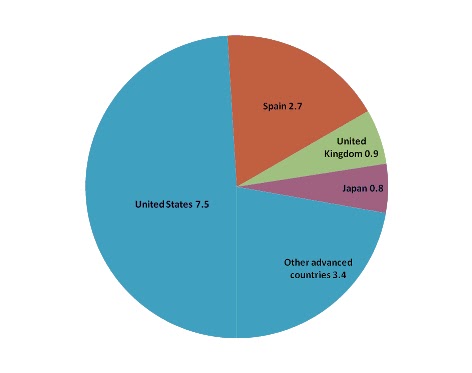
    The crisis has shown not only that “employer-friendly” labour market regimes are not employment-friendly, but also that they are dangerously pro-cyclical. In the US and Spain, two countries characterized respectively by underdeveloped labour market protection and massive precarious employment, the economic downturn rapidly translated into massive employment and wage losses. These two countries actually account for two-thirds of all crisis-related job losses in the advanced countries.
    Change in number of  unemployed people in advanced countries: 15.3 million  
    Source: IMF-ILO, 2010, Oslo
    Labour legislation has the double function of protecting workers against hazardous working conditions and abuse of market power as well as acting as an automatic stabilizer against the volatility and over-shooting of under-regulated labour markets. However, in recent decades there has been a regulatory race to the bottom. Deregulatory ‘successes’ in one country created parallel pressures to emulate it in neighbouring countries. True, not all countries deregulated to the same extent and some countries continued to pursue a high protection/high productivity path, but no country remained unaffected by the general tendency towards lower levels of protection. While a few individual countries managed to maintain and sometimes extend protective regulation under the current globalization regime, all felt the pressure to reduce labour costs by weakening employee rights and protection. This demonstrates the need for coordinated action to reverse the overall trend.
    During the three decades that prepared the grounds for the Great Recession, mainstream opinion in policy-making circles ignored or forgot what had been common sense 90 years ago when the ILO was founded.
    “The failure of any nation to adopt humane conditions of labour is an obstacle in the way of other nations which desire to improve the conditions in their own countries.(i)”
    Multinational companies and the global financial sector have undermined the capacity of democratic societies to ensure the sovereignty of the people and of law over the logic of the market. Profit seeking at the expense of the public good becomes an unavoidable reality when irresponsible business practices become legally possible. Sustainable enterprises based on the principles of collective bargaining, fair wages, non-discrimination, taxation and respect for labour standards are out-competed by those who do not hesitate to employ children, ignore minimum wages, evade taxation, circumvent labour legislation, save on health and safety and environmental protection, and abuse the open global economy to demand evermore preferable conditions for investment and externalize as many costs as possible to society.
    Universally applicable national labour legislation is necessary to avoid unfair competition within countries. It steers the economy towards a growth model based on innovation and product competition instead of exploitation. International Labour Standards complement and reinforce actions at national level. They are based on the understanding that in a global economy, national regulation must be harmonized and coordinated through an international labour standard setting process. They are safeguards against social dumping and can generate the mutual trust among nations that is a precondition for a stable open economy. Open markets can only be maintained when regulatory arbitrage is limited. If countries strive for export surplus by keeping wage growth systematically below productivity growth, they build up huge global imbalances and overcapacity that are not sustainable. Such strategies will either trigger a global race to the bottom or force other countries to adopt protective counter-measures.
    In order to avoid such a situation, governments need a mechanism that credibly ensures a regulatory floor applicable in all countries. This does not imply the establishment of absolute common standards, but it does involve a commitment towards a similar approach to labour protection in each country. Many labour standards do not entail substantial costs and can be applied in all countries independently of the level of development; such labour standards include the right to organize, the right to non-discrimination, the right to consultation with workers and employers, the right of workers to refuse work under hazardous conditions, the right to the safe handling of health-threatening chemicals and pesticides, and the right of workers’ organizations to access enterprises. Other standards, such as maternity protection, protection against excessive hours of work, and minimum annual vacation, are essential for workers’ health and should not be undercut under any circumstances. Moreover, many standards provide for flexibility in recognition of different levels of development. For example, coverage of a limited number of risks like unemployment, sickness, old age or invalidity for a certain percentage of the population is sufficient for ratification of the minimum social security convention.
    In 2009, ILO member states identified a set of labour standards for recovery as part of the Global Jobs Pact (GJP). They reiterated the importance of the core labour standards as human rights, but also recognised that for a regulatory response to the crisis, a much more comprehensive labour standards package was required.
    The standards identified in the GJP can be grouped into five areas:
    • Empowering workers to represent their interests by guaranteeing and promoting the right to organise and to bargain collectively as outlined in Conventions C. 87 and 98;

    • Protecting employees at the workplace against all forms of discrimination (C. 101) and abuse of force by employers (C. 29), against unjustified dismissal (Convention 158) and against the loss of wages in case of bankruptcy;

    • Guaranteeing minimum wage levels (C. 131) and social transfers that provide an adequate income floor (C. 102) and responsible public procurement policies (C.94);

    • Enforcing the application of labour laws and collective agreements for all workers through full recognition of the employment relationship and efficient labour inspections (C. 81);

    • Focusing all financial and economic policies on the objective of full, freely chosen and productive employment (C. 122).

    International Labour Standards are a potentially strong element to improve global governance and create the trust among nations that all countries apply labour standards – adapted to their level of development – in order to avoid a race to the bottom. This crisis must be the moment to strengthen governments’ commitments to labour standards as a contribution towards a globalization that respects workers’ rights and results in greater equality within countries and among nations. Universal ratification of existing ILO Standards would be a major contribution to coordinated global governance.
    The current ILO supervisory mechanism of regular reporting and independent assessment by a Committee of Experts is one of the most elaborate supervisory mechanisms in the United Nations (UN) system, but it has nevertheless not been strong enough to achieve the universal (or even close to universal) application of labour standards that member states expressed as desirable when they founded the ILO. Nearly all governments voted for the adoption of most conventions at international labour conferences. However, they have very often not followed up with ratification, let alone implementation.
    The previous decades of deregulatory irresponsibility have made a minority much richer and more powerful, but this regime did not serve that well societies at large. Continuing the drive for deregulation of labour markets will lead to a further rise in inequality, declining wage shares and unsustainable imbalances. If governments fail to provide credible international policy coordination including minimum labour standards, a re-nationalisation of economies will take place sooner or later. It might turn out as one of the ironies of history that those who continue to press for uncontrolled markets despite the bitter lessons of the Great Recession will be much more successful in destroying globalisation than the anti-globalisation campaigners of the last decades.
    Convincing governments and overcoming the resistance of market fundamentalists will crucially depend on the work of trade unions at both national and international levels. Trade unions have more influence in the ILO than in any other UN body, as they are part of its decision making structures. This is the time to campaign vigorously and to call on governments to consider a new ILO instrument with the sole objective of increasing the commitment to ratify and the capacity to implement existing labour standards. Moral persuasion and public exposure have proven to be insufficient incentives. The new mechanism should create a stronger pressure on governments to submit non-ratified conventions to their parliaments and to create financial obligations for all member states (except the least developed countries) that fail to do so or that fail to implement ratified conventions. These contributions should form a global fund for the promotion of international labour standards and help member states to create efficient and protected labour markets.
    A universal application of labour standards would be a major contribution to a well regulated global economy. Moral hazard and free riding are the enemies of all universal regulations. Whenever governments have been genuinely committed to mutual obligations, they have also been serious about enforcement. Demanding financial compensation from those who want to strive at the expenses of others is not a penalty or a sanction. It is necessary in order to level the playing field and to ensure that International Labour Standards do what they are supposed to do: decommodifying labour.

    Download this article as pdf

    Frank Hoffer is senior research officer at the Bureau for Workers' Activities of the ILO. He writes in his personal capacity.

    i Preamble ILO constitution (1919, Geneva)

    18 January 2011

    European Economic Governance: The next big Hold Up on Wages


    Ronald Janssen
    One of the main purposes of the current drive for European economic governance is to transform wages into the main or even single instrument of adjustment under monetary union. Strangely, this idea appears to enjoy a high degree of consensus among both conservative and progressive economists. For the former, extreme wage flexibility including wage cuts and sub-regional deflation is necessary if the rest of the Euro area is to catch up rapidly in competitiveness with Germany. For the latter, the rebalancing of competitive positions is to proceed by setting up some kind of ‘wage planification’ process at the European level in which German wages are to go up while wages outside Germany are going down and stay down for many years to come.
    Both views are based on the idea that there exists a direct and straightforward link between wages and competitiveness, as if one unit change in wage costs equals one unit change in competitiveness, or even jobs. However, a closer look at the German experience reveals that this assumption is totally flawed: competitive prices are not at the basis of Germany’s massive exports boom. What really drives German exports is the growth of its exports markets: if those economies into which Germany is exporting enjoy an economic boom, then German exports closely follow. Here, a recent analysis from the European Commission (2010) finds that the dynamism of Germany’s export markets explains almost the whole of the 7.3% annual average increase in its export volumes over the 1999-2008 period, whereas the contribution of more competitive pricing on German export performance is barely noticeable (0.3%).
    How to explain the fact that a decade of real wage stagnation has barely had any impact on Germany’s spectacular export boom? The reason has to do with the specialization pattern of its industry, focusing on products which the more dynamic (emerging) economies are most eager to buy (machinery, telecom equipment, transport infrastructures, etc.). This type of specialization pattern has the effect of making demand for German exports price inelastic: it is technical knowhow (‘how to produce efficient machinery’) and quality that count. In this equation, prices are a subordinated matter. Indeed, econometric studies (Artus, 2010) find that a 10% reduction in German export prices increases export volumes by 4% only. In the case of France, a similar price reduction would boost export volumes by as much as 12%.
    The fact that the demand for exports is relatively irresponsive to prices also explains why German business opted not to pass on falling unit labour costs in manufacturing into lower export prices. Doing so would only have made a small difference in export demand and overall production, implying a limited increase in total profits. The alternative of boosting profit margins by maintaining output prices while squeezing wages was substantially more attractive. In other words, business mostly used the sacrifices that were forced upon German workers during an entire decade to increase its own profit margins and dividend pay outs instead of creating jobs by becoming more competitive. In the end, it is not surprising to observe that the share of profits in Germany’s non financial sector has skyrocketed from 36.3% of gross added value in 2000 to 41.4% in 2008 (Eurostat, 2009).
    All of this implies that the ongoing discussion on European economic governance should be turned completely upside down. Pushing for competitive wage deflation in the Southern part of the Euro area is a dead end road. Given the deeply ingrained structural features of German industry, wage cuts in Spain or Portugal will barely alter these countries’ relative competitive positions with Germany. As argued above, the world is buying German exports not because they are cheap but because of their quality and of their type. By cutting wages, Southern Europe will mainly be competing for export demand with economies such as France, Eastern and Central Europe – or with themselves. However, the French economy, with high unemployment, is not exactly in the best position to digest the export shock that a wave of Southern wage deflation would bring about. Competing with Central and Eastern Europe on the basis of wages is also a lost cause: wages there are still much lower while most of these countries are outside the euro and may/will respond to a competitive wage devaluation by a competitive currency devaluation. This leaves workers in the South of Europe to compete…with each other. The ‘winner’ will be the country that cuts wages the most in comparison with the rest of the South. However, the taste of this ‘export’ victory will be bitter since the gain will come at the expense of a deep depression of domestic demand in the entire South of the Euro area.
    Unfortunately, the bad news does not end here. The mechanics of monetary union should not be forgotten either. With the economic weight of the South of Europe in the entire Euro area being limited to 15%, whereas the weight of Germany is as high as 25%, the response of monetary policy will necessarily be ambiguous. The European Central Bank is forced to set interest rates according to the average situation in the Euro area, not according to the situation in those parts of it that are in most trouble. This actually means that wage cuts in the South will be met with higher, not lower, interest rates as set by common Euro area monetary policy. With deflation taking hold while nominal interest rates are rising, the policy trap which these distressed economies find themselves in will be complete.
    In a cynical way, history is extracting its own revenge. When the single currency project was being set up back in the 1990s, rumours inside the Delors Commission claimed that monetary union would in the end cause so many problems that politicians would have no other choice than to take Europe forward. At that time, this referred to policies such as a substantially higher European budget, European investment policy and European taxes. Europe indeed now finds itself into such a situation calling for emergency action. However, blinded by the old obsession with cost competitiveness, it is cracking down on workers. This will prove to be a fatal mistake: extreme wage flexibility, even if it is presented as a type of ‘central wage planification’ in co-management with trade unions, in the end boils down to a big hold up on wages.

    Download this article as pdf

    Ronald Janssen works as an economic adviser in Brussels.

    References
    • Artus, P. (2010), Flash 2010, Paris 

    • Eurostat (2009), ‘Business profit share and investment are higher in the EU than in the USA’, Statistics in focus 28, Luxemburg.

    • European Commission (2010), ‘The impact of the global crisis on competitiveness and current account divergences in the euro area’, Quarterly report on the Euro Area, Vol. 9, No 1, Brussels

    29 November 2010

    Trade, employment and development: Back on track?

    Richard Kozul-Wright
    In today’s world of increased economic and political interdependence achieving a broad-based, rapid and sustained growth in incomes and employment involves even more complex policy challenges than in the past. This was the case before the recent crisis, but it is even more so as policy makers in both developed and developing countries look for ways to mitigate the damage from that crisis and build a more sustainable recovery.
    The International Labour Organisation (ILO) worries that the kind of integrated policy framework and the accompanying degree of policy coherence required to respond effectively to the crisis within and across countries is still not in place. In particular, the kind of mutually supporting links between macroeconomic policies, social protection systems and active labour market measures are still not established to ensure both an inclusive (job-rich) recovery and to realize the Millennium Development Goals (MDGs) within an acceptable time frame.
    This worry is very much shared by United Nations Conference on Trade and Development (UNCTAD). Indeed, when the development agenda is expanded beyond the MDGs to include the traditional issues of catch-up productivity growth, economic diversification and technological upgrading, then our worries tend to be amplified.
    At the G20 and other meetings, like the recent one in Oslo co-hosted by the ILO and the International Monetary Fund (IMF), there have been signs that the stranglehold on policy design by the financial institutions has begun to loosen. There have been some important steps away from policy orthodoxy, particularly by the IMF, on issues such as inflation targeting, capital controls and countercyclical policy measures.
    These are welcome developments but at the end of the day actions speak louder than words. The kind of programmes put together by the Washington institutions since the crisis have continued to carry much of the damaging policy baggage of the recent past, particularly with respect to procyclical adjustments and targets and squeezing public investment programmes, including in Least Developed Countries (LDCs).
    Despite the recognition that the growth in global interdependence poses greater problems today, the mechanisms and institutions put in place over the past three decades have not only fallen short on surveillance and the policy coordination challenge but have in many respects contributed to the dissonance and tensions that eventually culminated in the financial crisis that hit in 2008. The failure to make reforms now runs the very serious risk of retuning to “business as usual” and the danger of repeating the boom bust cycles of the recent past.
    The kind of institutional changes needed for financial stability - and the “global public good” which the IMF promises to deliver - have made little headway in recent discussions. These include larger, more predictable and less conditioned flows of development finance; adequate international liquidity to support countercyclical macroeconomic policymaking at the domestic level; the management, through some kind of orderly workout mechanism, of sovereign debt crises; a stable exchange rate system; and more representative form of international governance (though small steps have recently been agreed on this).
    The problem in achieving progress on these fronts has in one sense not been too little coherence but too much; namely an almost blind faith, particularly at the international level, in freely functioning markets to generate prosperity and stability at the national, regional and global levels.
    That is a debate which has not closed though there is a good deal more realism than a few years ago). But what seems not open to question is the fact that by focusing exclusively on a narrow definition of fundamentals (efficient markets, rational expectations, balanced budgets, price stability, and so on) the Washington institutions have consistently missed every single one of the major economic crises that have occurred over the past 25 years, from the savings and loans collapse in the US in the late 1980s, through the Asian financial crisis of 1997, to the sub-prime meltdown and the collapse of the Icelandic economy in 2008.
    These institutions have also missed (or worse neglected) one of the most persistent trends in the global economy over the past three decades, namely the massive increase in income inequality which has occurred, albeit to varying degrees, in almost all countries. This trend is closely linked to the rise of unregulated financial markets and institutions, a trend strongly promoted by these same institutions, and which is the characteristic feature of globalization in our era. This is certainly one of the reasons why rising inequality has been accompanied by such a volatile mixture of shocks, imbalances, asset cycles and generally sub-standard economic performance.
    The key imbalances in this regard are, on the one hand, the falling wage share and the rising level of household indebtedness and, on the other, the rising profit share and the declining (or stagnant) levels of productive investment. Failure to address these imbalances has made for a weak and uneven recovery and a persistent state of labour market distress even when growth has picked up.
    These are trends which UNCTAD also identified in its latest Trade and Development Report as lying behind the jobs crisis in many developing countries even prior to the recent crisis.
    Unsatisfactory labour market outcomes, in developing countries as much as developed countries, are also due to unfavourable macroeconomic conditions that inhibit investment and productivity growth, along with inadequate wage growth which continues to repress domestic demand. External demand can compensate up to a point but there are dangers with this strategy which can reinforce wage repression and limit capital formation.
    The ILO argues that the rebalancing of labour market conditions will require improving wage determination mechanisms; measures to promote productivity growth; and the narrowing of income inequalities. This is very much supported by UNCTAD’s analysis. We would also put a very strong emphasis on strategies to enhance domestic demand as an engine of employment creation. The mixture of employment friendly monetary, financial and fiscal policies will have to be tailored to particular local conditions and constraints. Industrial policies will also need to be added to the policy mix; this is already happening in a number of middle-income developing countries
    A critical role in moving to a jobs-rich development path must be ceded to a developmental state which aims to create and manage rents in line with the objectives of inclusive growth.
    A key question for us is whether we have global arrangements capable of providing the financial and monetary stability to help these states pursue development strategies that sustain the expansion of employment and output and encourage the structural diversification that are necessary for their own long-term success and their effective insertion into the international trading system?
    It should be clear to all by now that the question of stability and appropriate alignment of exchange rates (particularly among the G-3 currencies) remains unresolved, and large swings have posed a persistent threat to global financial stability, the international trading system, and to exchange-rate policy and other aspects of external financial management in developing countries. The daily volatility in these rates can often offset annual gains in domestic productivity and drastically alter international competitiveness. This problem has been recognized in recent discussions (though the language of "currency wars" is unhelpful and misleading) but ignored in current global arrangements which are based on a false dichotomy between trade and finance.
    Moreover, the international division of labour is still greatly influenced by commercial policies which favour products and markets in which more advanced countries have a dominant position and a competitive edge. High tariffs, tariff escalation, and subsidies in agriculture and fisheries are applied extensively to products that offer the greatest potential for export diversification in developing countries. The panorama of protectionism is no better for industrial products including footwear, clothing and textiles where many developing countries have competitive advantages. The abuse of anti-dumping procedures and product standards against successful developing-country exporters creates further obstacles. Given the adjustment that developed countries will be required to take in the coming years, it is not difficult to imagine a worsening of this situation, unless these countries can make the appropriate expansionary responses which allow their citizens to adjust as living standards rise.
    It is also widely believed that the existing arrangements do not allow sufficient policy space to developing countries to overcome their longer-term payments constraint by pursuing targeted trade, industrial and technology policies and thus increasing their export capacity in more dynamic sectors. There are increasing concerns that persistent policy orthodoxy and global arrangements have the result of kicking away the ladder by which today’s advanced countries attained their present levels of economic development, denying developing countries many of the policy instruments that were widely and successfully used in the past.
    The need for a more effective multilateral trade and financial system cannot be ignored; indeed developing countries continue to have a stake in building such a system. Controlling finance remains the place to begin this task as it was back in the 1945. As Keynes noted at that time: “It is very difficult while you have monetary chaos to have order of any kind in other directions… “

    Download this article as pdf

    Richard Kozul-Wright is a senior UN economist heading the unit on Economic Integration and Cooperation Among Developing Countries in UNCTAD. He was previously in charge of the World Economic and Social Survey in UNDESA, New York. He holds a Ph.D in economics from the University of Cambridge, UK, and has published papers on economic history and development issues.

    Older Posts Home

    Share

    Twitter Facebook Stumbleupon Favorites More

    Subscribe to the Mailing List

    If you want to subscribe to the GLC mailing list, please click here or send an email to "sympa@ilo.org" with subject "sub list-glcolumn".

    Contribute to the GLC

    If you want to contribute to the Global Labour Column, please read here the Guidelines for Contributions

    Languages


    Donations

    More Info

    Popular Posts

      From Financial Crisis to Stagnation: The Destruction of Shared Prosperity and the Role of Economics
      Trade Unions, Class Struggle and Development
      Supporting Dissent versus Being Dissent

    TAGS

    Financial Crisis Trade Unions Neoliberalism Globalisation Labour Market Development Strategies Wage Decent Work Growth Social Movements Workers' rights Collective Bargaining Financial Market Labour Standards Financial Regulation Inequality Social Security Tax Europe Fiscal Space Public Investment Social Democracy Corporate Governance Economic Democracy Struggle Competitiveness Environment Global Warming Informal Economy Care Work Central Bank Domestic Workers Progressive alliances Business and Human Rights Capital Flight Economic Development Online Campaigning Pensions Public Works Programmes

    PUBLICATIONS

    Click here to view more

    Blog Archive

    • ▼  2012 (12)
      • ▼  May (1)
        • From Financial Crisis to Stagnation: The Destructi...
      • ►  April (2)
      • ►  March (3)
      • ►  February (4)
      • ►  January (2)
    • ►  2011 (39)
      • ►  December (3)
      • ►  November (4)
      • ►  October (3)
      • ►  September (4)
      • ►  August (3)
      • ►  July (2)
      • ►  June (3)
      • ►  May (3)
      • ►  April (4)
      • ►  March (4)
      • ►  February (4)
      • ►  January (2)
    • ►  2010 (39)
      • ►  December (3)
      • ►  November (5)
      • ►  October (4)
      • ►  September (2)
      • ►  August (2)
      • ►  July (3)
      • ►  June (4)
      • ►  May (1)
      • ►  April (4)
      • ►  March (4)
      • ►  February (4)
      • ►  January (3)
    • ►  2009 (5)
      • ►  December (3)
      • ►  November (2)

    Popular Posts

      From Financial Crisis to Stagnation: The Destruction of Shared Prosperity and the Role of Economics
      Trade Unions, Class Struggle and Development
      Supporting Dissent versus Being Dissent

     
    Copyright © 2011 GLCtest | Powered by Blogger
    Design by Free WordPress Themes | Bloggerized by Lasantha - Premium Blogger Themes | 100 WP Themes