skip to main | skip to sidebar
GLCtest
  • HOME
    • ABOUT US
    • GLC ANTHOLOGIES
  • LINKS
    • RECOMMENDED SITES
    • DISCLAIMER
  • GLC Global Board
  • AUTHORS
  • CONTACT
  • GLU
  • ICDD
  • Follow Us on Twitter

    28 May 2012

    From Financial Crisis to Stagnation: The Destruction of Shared Prosperity and the Role of Economics

    Thomas L Palley
    Marshall McLuhan, the famed philosopher of media, wrote “We shape our tools and they in turn shape us”. His insight also applies to the economy which is shaped by economic policy derived from economic ideas, and it is the theme of my recent book which argues the global economic crisis is the product of flawed policies derived from flawed ideas.
    Broadly speaking, there exist three different perspectives on the crisis. Perspective 1 is the hard-core neoliberal position, which can be labelled the “government failure hypothesis”. In the U.S. it is identified with the Republican Party and the Chicago school of economics.

    Read More »

    16 April 2012

    The King and Us - Why Thailand’s lèse majesté law matters to unions and the world


    Ian Graham 
    Somyot Prueksakasemsuk

    “Union rights are human rights.” That has been said loud and often. But it bears repeating. Labour rights are specialised extensions of the principles set out in the Universal Declaration of Human Rights. “Everyone has the right to form and to join trade unions for the protection of his interests,” the declaration insists. Nobody reading this column is likely to disagree (except, perhaps, with the “his”). Philosophically, core human rights such as freedom of association have always underpinned core labour rights.

    Read More »

    4 April 2012

    Lack of Rain in the Rainforest

    Nora Rathzel
    From work or nature to work and nature: another kind of unionism
    On a one-week tour organised by João Paulo Cândia Veiga from the University of São Paulo and Manoel Edivaldo Santos Matos from the Union of Rural workers (Sindicato dos Trabalhadores y Trabalhadoras Rurais de Santarém, STTR) in Pará, a region of the Brazilian Amazonas, we visited eight communities along the Rivers Arapiuns, Maró and Amazonas. These are small communities of between 90 and 300 people. They are of mixed indigenous and Portuguese origin, some groups defining themselves as indigenous.

    Read More »

    26 March 2012

    Trade Unions, Class Struggle and Development

    Ben Selwyn
    How do class relations contribute to processes of capitalist development? Can workers’ struggles generate more progressive forms of human development, in the form of improved working and non-working conditions, rising pay and active social movements that bring workers’ concerns to the fore? Within much thinking about development the principal debate over the past 30 years or so has been between advocates of state-led and market-led development. For these advocates either state allocation and generation of resources or market-efficiency generates a growing pot of social wealth which trickles down, at some indeterminate point in the future, to the labouring population.

    Read More »

    15 March 2012

    Renaissance of Pay Clauses in German Public Procurement and the Future of the ILO Convention 94 in Europe

    Thorsten Schulten
    Public procurement is of high economic importance. In many countries it covers up to one fifth of the annual national GDP. Public authorities have always used their market power as a contracting entity to promote certain social and labour standards. The ILO had even adopted a separate Convention on Labour Clauses in Public Contracts (Convention 94 from 1949). In order to promote fair competition and to avoid downward pressure on wage and working conditions in the tendering process, the ILO Convention 94 wants to ensure that workers hired in contracting companies do not receive less favourable conditions than those laid down in the appropriate collective agreements.

    Read More »

    5 March 2012

    The Microfinance Delusion

    Milford Bateman
    The optimistic beginning
    Thirty years ago, it was widely thought that the perfect solution to unemployment and poverty in developing countries had been found in the shape of microfinance, the provision of tiny microloans used by the poor to establish an income-generating activity. Microfinance is most closely associated with the US trained Bangladeshi economist and 2006 Nobel Peace Prize recipient, Dr Muhammad Yunus. By celebrating self-help and individual entrepreneurship, and by implicitly discrediting all forms of collective effort, such as trade unions, social movements, cooperatives, public spending, a pro-poor ‘developmental state’ and – most of all – collective moves to ensure a more equitable redistribution of wealth and power, neoliberal policy-makers in the international development

    Read More »

    27 February 2012

    International Framework Agreements: Possibilities for a new Instrument

    Siglinde Hessler
    A new instrument of international labour regulation
    International Framework Agreements (IFA) are important in international labour regulation. As the globalization of production and markets is increasing, an international regulation of labour is strongly needed. Existing instruments such as the OECD Guidelines for Multinational Enterprises, the ILO Tripartite Declaration of Principles Concerning Multinational Enterprises and Social Policy and the great number of ILO conventions among others have set important marks in the debate, but still lack recognizable success as they lack the power of sanctions. Furthermore, the growing number of voluntary and unilateral declarations on social standards, which are part of the Corporate Social Responsibility strategy of companies, have not attained concrete results as they lack binding force.

    Read More »

    20 February 2012

    The Crisis: the Response of the European Trade Unions

    Bernadette Ségol
    The unanimous political response to the crisis across Europe today is that of austerity and budgetary discipline. Cutting pay and social welfare, attacking bargaining mechanisms and making employment contracts ultra-flexible: that is the current paradigm, the Berlin/Brussels consensus, offered as the only way forward.
    This solution is not working and will not work. It stifles growth and blocks the way to job creation. We can no longer ignore its disastrous social consequences and the rise of nationalism in many European countries bringing into question our essential values based on solidarity.
    We need to change the narrative.

    Read More »

    13 February 2012

    A Tide of Inequality: What can Taxes and Transfers achieve?

    Malte Luebker [1]
    Inequality is a top issue in the public agenda, partly as a result of the financial crisis that helped draw attention to this topic. As banks relied on the support of taxpayers and millions of workers had lost their jobs, people began to see the compensation of bank CEOs – with an average 2010 pay package of $9.7 million in Europe and the US[2] – as obscene.
    Those at the top of society have long captured the gains from economic growth. From 1970 to 2008, the annual incomes of the top 1% of US taxpayers rose threefold in real terms from $380,000 to $1,140,000. By contrast, the incomes of the bottom 90% remained where they were in 1970 – at $31,500 per year (in real 2008 dollars).[3]

    Read More »

    6 February 2012

    Minimum Wages in Europe: a Strategy against Wage-Dumping Policies?

    Lars Vande Keybus
    In numerous countries such as Ireland, Greece, Portugal, Hungary, and others, the European Commission (EC) - in cooperation with the International Monetary Fund (IMF) and European Central Bank (ECB) - has imposed a dramatic policy mix that consists of blind austerity, privatisation and wage cuts. Following the adoption of the notorious ‘six-pack’ in December 2011, it is clear that such policies will become a general rule all over Europe. The ‘six-pack’ sets up a structure in which the EC is granted a role as budgetary supervisor and punisher. The commission has the opportunity to almost automatically punish European Union (EU) members who do not follow recommendations to correct

    Read More »

    18 January 2012

    EU ‘Austerity’ Deal won’t work – Irish Workers face a grim Future

    Frank Connolly
    The EU summit on Friday 9 December, during which 26 out of 27 member countries agreed on a new intergovernmental treaty including a “fiscal compact” to enforce budgetary discipline on states which breach the 3% deficit (of GDP) limit, will not provide the growth strategy that is necessary to help deeply indebted euro zone countries out of recession.
    The fiscal compact proposals will not solve the problems of the euro for the peoples of Europe but will instead “institutionalise austerity” by enforcing an annual structural deficit that does not exceed 0.5% of GDP. A strategy for growth and for a rapid job generating recovery is completely missing. Without such a strategy there is no relief in sight for the stressed countries.
    Nor did this summit, dominated by German and French political and financial considerations, include any suggestion of debt restructuring, or euro bonds or any kind of fiscal transfer mechanism to direct resources from prosperous regions to

    Read More »

    10 January 2012

    Global Labour Online Campaigns: The next 10 Years

    Eric Lee
    In November 2011, the military dictatorship in Fiji jailed two of the country’s most prominent trade union leaders. Following the launch of an online campaign sponsored by the International Trade Union Confederation (ITUC) and run on the LabourStart website, some 4,000 messages of protest were sent in less than 24 hours. The government relented, the union leaders were freed, and the campaign suspended. A month earlier, Suzuki workers locked out in India waged a successful online campaign through the International Metalworkers Federation (IMF) and LabourStart. Almost 7,000 messages flooded the company’s inboxes, and after only a few days, a compromise was reached.

    Read More »

    20 December 2011

    The G20 and Jobs: Time for Plan B

    John Evans
    When the economic crisis broke following the collapse of Lehman Brothers in September 2008 and the global banking system seized up, workers began to be laid off, families saw their houses repossessed and banks teetered on the brink of collapse. Financial panic knew no frontiers. It was clear that a coordinated global response by governments and institutions was required to counter what the IMF termed the “Great Recession”. The major economies used the G20 as the forum to coordinate their responses, scaling it up from a low-key Finance Ministers’ Forum into a Heads of Government Summit process – effectively replacing the G8.
    The international trade union movement responded rapidly[1], matching the “heat” of the street with the “light” of policy messages coming out of the G20 Summits. Trade union demands centred on stabilising employment, putting in place social protection for workers hit by the crisis, and effective and coordinated government intervention to support the global economy so as to prevent the “Great Recession” becoming a 1930s-style “Great Depression”.

    Read More »

    12 December 2011

    How Capital Flight Drains Africa: Stolen Money and Lost Lives

    Léonce Ndikumana
    James K. Boyce
    Financial scams often cheat working people. In most cases, the victims simply lose their money. In Africa, some lose their lives.
    Sub-Saharan Africa experienced an exodus of more than US$700 billion in capital flight since 1970, a sum that far surpasses the region’s external outstanding debt of roughly US$175 billion. Some of the money wound up in private accounts at the same banks that were making loans to African governments.
    Inflows of foreign borrowing and outflows of capital flight are closely intertwined. As we document in the book Africa’s Odious Debts, there is a strong correlation between the two. For every dollar of foreign borrowing, on average more than 50 cents leaves the borrower country in the same year.

    Read More »

    5 December 2011

    What role do big corporations play in the economic well-being of the European Union? A non-standard view of Eastern Europe

    Ognian N. Hishow
    The global economic crisis caused demand in the European Union (EU) to drop to low levels. In order to mitigate the effects of the crisis, stimulus packages were hastily put up in the old member states (OMS). A considerable part of the spending was directed to the financial and banking sectors as it was concluded that these were systemically important. In addition, the core sector of Europe’s industry, car production, also received significant financial support.
    Both the banking sector and the automotive industry play a crucial role in the new member states (NMS) of the EU. Hence one would expect that spending on banks and automotive firms in Western Europe, where the OMS are located, is what would have kept Eastern Europe’s economy, where most of the NMS are located, afloat during the crisis.

    Read More »

    28 November 2011

    Working for a Social Protection Floor

    Ellen Ehmke
    Andreas Bodemer
    Worldwide, 75% of the population have no or insufficient access to social security provision. Despite the long record of social security as a human right, which is enshrined in the Universal Declaration of Human Rights (Art. 22, 25) and the International Covenant on Economic Social and Cultural Rights (Art. 9), its implementation has been widely disregarded.
    Many pretexts have been given to excuse this severe injustice. Prominently, the competitiveness of a globalised economy has allegedly caused a scarcity of financial resources available for social policies. On the one hand, the assumed negative effects of social security on economic growth have served as reason to cut back globally.

    Read More »

    21 November 2011

    Supporting Dissent versus Being Dissent

    Steven Toff
    Jamie McCallum
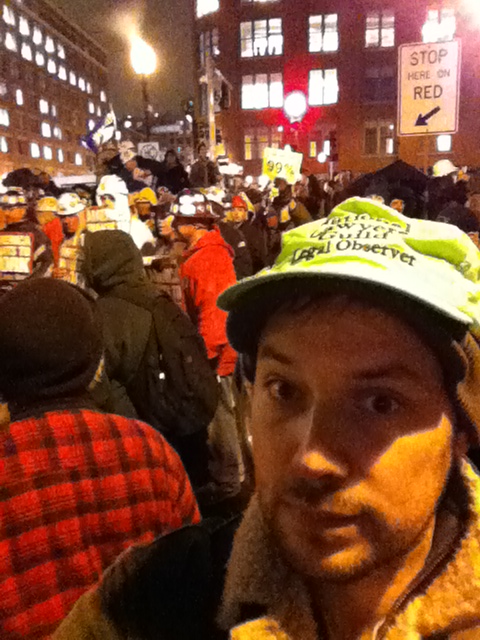
    When the Occupy Wall Street movement (OWS) began on September 17th 2011, few could have predicted the wave of occupations that would soon sweep the rest of the country and indeed much of the world in what has been referred to as the American Fall. While it remains to be seen how this inchoate movement will mature, it has so far exceeded everyone’s calculations - it is the first time since the 1999 anti-WTO demonstrations in Seattle that tens of thousands in the US are taking to the street for economic reasons. Average Americans, many of whom have long understood the moral and economic turpitude at the root of Wall Street, are now expanding that stance to make a wholesale critique of neoliberalism and questioning some of the most foundational principles of capitalism.

    Read More »

    14 November 2011

    Decent Work 2.0

    Frank Hoffer
    Last month, Juan Somavia, the long serving Director-General of the International Labour Organisation (ILO) announced his departure in 2012.
    As head of the ILO, he introduced the Decent Work Agenda in 1999 to re-focus the ILO and make it relevant for the 21st century. Twelve years later, the concept of ‘Decent Work’ is firmly established in the global debate and as an objective of national policy. It appears in many documents of the multilateral system, the G20 and national policy fora. It generates millions of Google hits. It is the subject of much academic research and debate. It is enshrined in several ILO Conventions and Declarations, and the international trade union movement introduced the annual Decent Work Day to campaign for workers’ rights. ‘Decent Work’ is so ubiquitous in ILO documents that some cynics say: "Decent Work is the answer, whatever the question!"

    Read More »

    7 November 2011

    New Economy vs. Old Ways

    Goran Lukić
    New buzz-words are entering into the traditional economic landscape of industrial relations. Managers and politicians who want to be in touch with new economic trends are using terms such as 'green economy', 'renewable energy' and 'corporate social responsibility (CSR)'. Another concept that is being touted as a 'big idea; is 'fair-trade' or 'Creating Shared Value (CSV)'. It seems that these terms are being translated into real action. According to an HSBC Global report, 19% of anti-crisis measures in France were put into the renewable energy sector in 2009, while 13% of Germany's 2009 anti-crisis measures were put into green investment and green tax reform. Q-Cells, a manufacturer of photovoltaic cells, which has its headquarters in the German city Bitterfeld-Wolfen, began its operations in 1999 with 19 employees, and soon had more than 1 000 people on its payroll.[1]

    Read More »

    31 October 2011

    Contesting a ‘just transition to a low carbon economy’

    Jacklyn Cock
    Introduction
    Recently, the South African labour federation, the Congress of South African Trade Unions (Cosatu), has expressed its commitment to a ‘just transition to a low carbon economy.’ However, at this moment the content of that commitment is unclear. Members of Cosatu affiliates could have very different understandings of the scale and nature of the changes involved. A ‘just transition’ could involve demands for shallow change focused on protecting vulnerable workers, or it could involve deep change rooted in a vision of dramatically different forms of production and consumption. In this sense, the ecological crisis represents an opportunity to not only address the unemployment crisis in our society, but to demand the redistribution of power and resources, to challenge the conventional understanding of economic growth and to mobilise for an alternative development path.

    Read More »
    Newer Posts Older Posts Home

    Share

    Twitter Facebook Stumbleupon Favorites More

    Subscribe to the Mailing List

    If you want to subscribe to the GLC mailing list, please click here or send an email to "sympa@ilo.org" with subject "sub list-glcolumn".

    Contribute to the GLC

    If you want to contribute to the Global Labour Column, please read here the Guidelines for Contributions

    Languages


    Donations

    More Info

    Popular Posts

      From Financial Crisis to Stagnation: The Destruction of Shared Prosperity and the Role of Economics
      Trade Unions, Class Struggle and Development
      Supporting Dissent versus Being Dissent

    TAGS

    Financial Crisis Trade Unions Neoliberalism Globalisation Labour Market Development Strategies Wage Decent Work Growth Social Movements Workers' rights Collective Bargaining Financial Market Labour Standards Financial Regulation Inequality Social Security Tax Europe Fiscal Space Public Investment Social Democracy Corporate Governance Economic Democracy Struggle Competitiveness Environment Global Warming Informal Economy Care Work Central Bank Domestic Workers Progressive alliances Business and Human Rights Capital Flight Economic Development Online Campaigning Pensions Public Works Programmes

    PUBLICATIONS

    Click here to view more

    Blog Archive

    • ▼  2012 (12)
      • ▼  May (1)
        • From Financial Crisis to Stagnation: The Destructi...
      • ►  April (2)
      • ►  March (3)
      • ►  February (4)
      • ►  January (2)
    • ►  2011 (39)
      • ►  December (3)
      • ►  November (4)
      • ►  October (3)
      • ►  September (4)
      • ►  August (3)
      • ►  July (2)
      • ►  June (3)
      • ►  May (3)
      • ►  April (4)
      • ►  March (4)
      • ►  February (4)
      • ►  January (2)
    • ►  2010 (39)
      • ►  December (3)
      • ►  November (5)
      • ►  October (4)
      • ►  September (2)
      • ►  August (2)
      • ►  July (3)
      • ►  June (4)
      • ►  May (1)
      • ►  April (4)
      • ►  March (4)
      • ►  February (4)
      • ►  January (3)
    • ►  2009 (5)
      • ►  December (3)
      • ►  November (2)

    Popular Posts

      From Financial Crisis to Stagnation: The Destruction of Shared Prosperity and the Role of Economics
      Trade Unions, Class Struggle and Development
      Supporting Dissent versus Being Dissent

     
    Copyright © 2011 GLCtest | Powered by Blogger
    Design by Free WordPress Themes | Bloggerized by Lasantha - Premium Blogger Themes | 100 WP Themes